


Discover how rebate management and volume discounts help maximise supplier returns, reduce manual errors, and automate financial processes.
Discounts left behind
Agreed volume discounts often go unclaimed because nobody tracks them.
Tracked automatically
Software follows the realised volumes against the agreement.
Money back
What you negotiated actually comes in.
Volume discounts are a familiar topic in contract negotiations; buyers and suppliers often spend a great deal of time on them. Yet, in practice, the agreed bonuses or rebates are not always fully claimed. This is where direct financial gains can be made. With Rebate Management, this process becomes automated and manageable, allowing organisations to finally capture the full value of their rebate agreements.
“The way organisations handle costs and bonuses is transforming because of this,” says Maarten de Ru, Director Partners & Alliances at ISPnext.
What is Rebate Management and why does it matter?
Rebate Management is the process of managing the discounts, bonuses or refunds that suppliers grant when certain purchase volumes or conditions are met. For example, suppliers may refund a specific amount at the end of a period once an organisation has purchased a defined quantity or reached a certain spend threshold.
This process is still handled manually in many organisations, often in Excel, using data from multiple systems. This makes it error-prone, time-consuming and difficult to oversee. With Rebate Management software, all bonus agreements are centrally recorded and automatically calculated, providing real-time insight into the status of all volume discounts. “Rebate Management is fully integrated within our Source-to-Pay platform, and therefore with client systems such as their ERP,” explains Maarten.
Contract Management in 5 steps
whitepaper ' Ready for Contract Management in 5 Steps ' and discover how to easily optimise your contract management. Learn practical steps for efficient management and maximum control over your contracts. Start improving today!
Rebate Management vs. volume discounts: what’s the difference?
A rebate is essentially a refund, a form of volume discount that is paid retrospectively. Where traditional discounts are deducted directly from the invoice, suppliers with a rebate agreement pay back a sum at the end of a period based on the realised purchase volumes. This type of rebate agreement benefits both the supplier and the buyer. Suppliers encourage loyalty and continuity, while buyers benefit from extra margins on higher volumes. Procurement teams often refer to these as quantity discounts or retrospective rebates, all variations of the same principle. The key difference lies in timing; with a rebate, the settlement happens afterwards.
Common challenges in claiming rebates
Many organisations leave money on the table because volume discounts are not properly documented or followed up. Maarten sees this often in practice.
“Rebates are often tracked manually, using spreadsheets with data from different systems. This leads to a lack of overview, both in Procurement and Finance.” In some cases, as much as 40% of spend occurs outside centrally negotiated contracts, so-called ‘off-contract spend’. As a result, volume thresholds are not reached, or only at a later stage. Even when they are achieved, rebates are often not collected due to a lack of visibility.
According to Maarten, the amounts involved are significant. “Missed rebates can account for around 0.2% of total spend. That might sound small, but when you’re talking about millions in spend, those are substantial sums. It’s money that’s literally on the table.”
How rebate software can automate and optimise processes
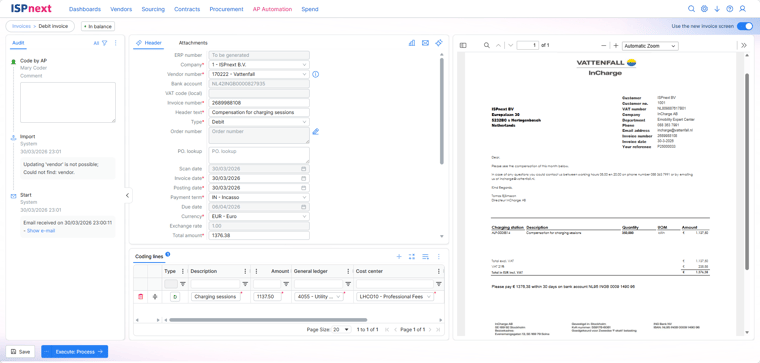
With Rebate software, the entire process of managing discount agreements becomes automated, from recording terms to calculating and collecting payments.
The benefits:
- Real-time insight into purchase volumes, agreements and progress;
- Automatic calculation of eligible rebates;
- Fewer errors by eliminating manual processes;
- Faster communication between Procurement, Finance and suppliers;
- Maximum savings by signalling rebate deadlines and invoicing opportunities in time.
“The platform proactively reminds you of deadlines and suggests ways to maximise discounts,” says Maarten. With Rebate Management, the entire process becomes transparent. Both Procurement and Finance view the same data, taken from contracts, invoices and purchase orders. This creates control, trust and efficiency within financial management.
Building a smart rebate strategy with your suppliers
Rebate Management forms an integral part of modern Source-to-Pay. By automating rebate processes, every bonus agreement becomes visible, measurable and controllable. “The return on investment is immediately visible,” says Maarten. “You literally get cash back; existing agreements are realised and directly contribute to the financial result.”
Rebate Management was developed in close collaboration with users of the Source-to-Pay platform. This ensures it aligns seamlessly with daily practice. Procurement and Finance teams can further professionalise their processes, spending less time on manual tasks and more on strategic supplier management.
“Each euro retained contributes directly to your overall performance.”
 Maarten de RuDirector Partners & Alliances | ISPnext
Get full value from your rebate agreements
For suppliers, supplier rebates are a key way to encourage long-term collaboration. Within the Source-to-Pay platform, all pricing agreements with suppliers are centrally managed and linked to real purchase data. “Both parties look at the same data within the platform,” explains Maarten. “This avoids discussions about what is or isn’t part of the rebate agreements. It improves relationships and speeds up settlements.”
Through the integrated Supplier Portal, suppliers can follow the progress of their rebates in real time. This means fewer misunderstandings and more transparency throughout the chain.
The hidden value within your procurement process
Most organisations underestimate how much hidden value exists within their procurement processes. Rebates are a clear example, these are revenues that often remain invisible in financial reporting.
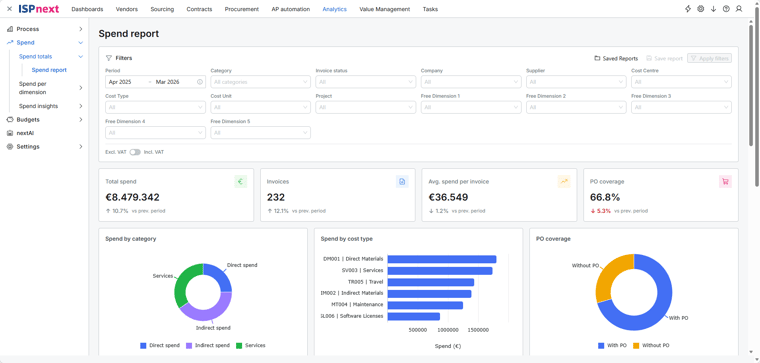
By digitising these processes, you can uncover areas where extra value can be achieved. The Source-to-Pay platform provides insight into spend data, contracts and performance, enabling you not only to save costs but also to negotiate better terms with suppliers. “Rebate Management is the latest milestone in our mission to simplify spend management,” says Maarten. “It enables organisations to manage rebates in real time and strengthen their competitive position.”
Step-by-step: launching a rebate programme
An effective rebate programme starts with structure. These five steps will help your organisation implement successful rebate management:
- Align: Establish clear rebate agreements with suppliers.
- Procure: Ensure purchases fall within these agreements.
- Pay: Settle invoices on time to maintain rebate eligibility.
- Monitor: Keep spend data and forecasts up to date.
- Claim: Validate and collect the agreed discounts.
By automating this process with the Source-to-Pay platform, you reduce manual work and minimise errors. The result: a more efficient procurement process, greater control and higher returns on your rebate agreements.
Continuous professionalisation
ISPnext continues to develop its Source-to-Pay platform in collaboration with its customers. The latest addition, Rebate Management, is a perfect example of this. “The way organisations manage costs and bonuses is changing fundamentally,” says Maarten. “This enables organisations to manage purchase rebates in real time. It delivers immediate savings and translates into a competitive advantage.” With this solution, ISPnext strengthens its position as the first provider to fully integrate Rebate Management into its Source-to-Pay platform.
This article is partly based on publications created in collaboration with Executive Finance and Vakblad DEAL!.
Frequently asked questions
Rebate management is the process of managing bonus agreements and supplier rebates, a form of discount management that ensures agreed rebates are actually collected. Automating this process prevents errors and makes rebate income transparent.
Rebate software automates rebate tracking, calculations and validations, providing real-time visibility and control over rebate accruals while supporting better financial forecasting.
A rebate is a retrospective payment, a retrospective rebate, while a volume discount is applied directly to the invoice. Both encourage higher purchasing.
Because rebate agreements are often not centrally recorded; manual processes and spreadsheets lead to missed thresholds and deadlines. With a well-designed rebate programme and automation, these losses can be prevented.
Map your rebate programmes and supplier agreements, automate data tracking and reporting, and align Procurement and Finance. A clear rebate strategy ensures you maximise every rebate opportunity.

.png?width=760)



.png?width=760)



.png?width=760)
.png?width=760)
.png?width=760)
.png?width=760)